To the content

PH Survey Reveals Needs, Challenges of Patients & Caregivers

November 27th 2025
Think big, act local: results of a recent multinational survey show that not only PH patients and their caregivers have different needs and challenges but that there are also country-specific differences. Building on these insights, AOP Health aims to inspire initiatives tailored to local patient and caregiver needs and priorities, acknowledging that effective engagement across Europe requires more than one-size-fits-all measures.

Understanding the Needs of Pulmonary Hypertension Patients and Their Caregivers: Insights from a European Survey

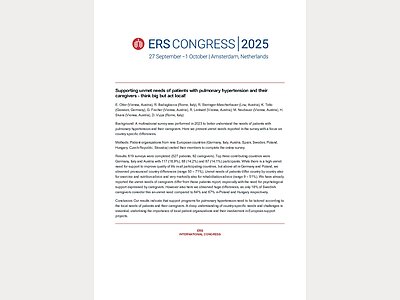
Living with pulmonary hypertension (PH) is a daily challenge — not only for those diagnosed, but also for the people who care for them. To better understand these challenges, PHA Europe, in cooperation with AOP Health and OrphaCare, conducted a multinational survey in 2023. The aim was to gain deeper insights into the needs, experiences, and priorities of PH patients and their caregivers across Europe.

Patient organizations from nine European countries – Germany, Italy, Austria, Spain, Sweden, Poland, Hungary, the Czech Republic, and Slovakia – joined forces to make this study possible.

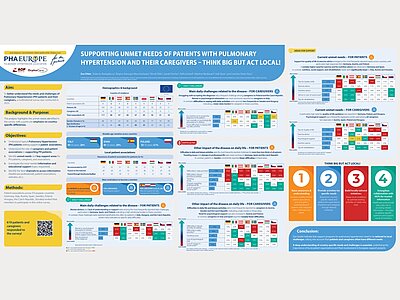
A total of 619 people participated, including 527 patients and 92 caregivers, with the largest response rates from Germany, Italy, and Austria.


Martina Neubauer

The original target was to get 230 people to complete the survey. The high number of responses shows that patients and caregivers wanted to make their challenges visible.

The survey revealed meaningful differences between patients and caregivers, as well as significant country-specific variations.

•    Patients most often turn to patient associations for information about the disease and tips for daily management.
•    Caregivers, on the other hand, primarily seek psychological support, often expressing a lack of emotional resources to cope with the burden of caring for someone with PH.

On average, participants reported that it still takes around 35 months from the first symptoms until a PH diagnosis is confirmed — a delay that can greatly impact both treatment and quality of life.

Both patients and caregivers said they experience limitations in daily life — from reduced leisure and travel opportunities to changes in professional activity. This shared experience explains why one of the most important reasons for engaging with patient organizations was to find support in daily treatment management and exchange with others in similar situations.

The survey revealed notable differences between countries, reflecting the diverse experiences and priorities of patients and caregivers across Europe.

  • In Spain, Poland, and Hungary, the main motivation for joining a patient organization was the desire to receive help and support for daily disease management and treatment.
  • Patients in Germany, Spain, and Poland most often reported emotional distress and a lack of understanding or support from those around them — highlighting the high emotional burden of living with pulmonary hypertension.

The survey highlights that pulmonary hypertension has a significant impact on everyday life — not only for patients but also for their caregivers.

  • Impact on patients:
    About two-thirds of patients across all participating countries reported difficulties engaging in leisure activities. In Germany, Spain, and the Czech Republic, many also faced restrictions when traveling and changes in their professional lives due to the disease.
  • Impact on caregivers:
    Caregivers in Austria, Sweden, and the Czech Republic commonly described challenges maintaining leisure activities, while those in Austria and Poland expressed a particularly strong need for psychological support to cope with emotional strain.
  • Support needs among patients:
    Respondents across all countries emphasized the importance of guidance to improve quality of life and advice on physical activity. These needs were especially pronounced in Germany, Austria, and Poland. In Germany and Spain, there was also a notably higher demand for exercise and nutrition counseling.
  • Support needs among caregivers:
    Caregivers in Germany, Poland, and Hungary most frequently requested advice on quality of life, while psychological support was considered essential in all countries — particularly in Austria, Spain, Poland, and Hungary.

Based on the findings, several key steps were identified to strengthen support for PH patients and caregivers:

  1. Raise awareness and understanding – increase visibility of local patient associations and inform healthcare professionals about the different challenges of patients and caregivers.
  2. Provide activities tailored to specific needs – address country-specific needs for both physical and emotional wellbeing.
  3. Build locally tailored initiatives – recognize that each country’s context and culture are different and create or optimize activities.
  4. Strengthen collaboration with healthcare professionals – ensure patients receive trusted and accurate information while focusing on support needs.
Bianca Tan

What we conclude from the survey is that it is key to create profile-specific initiatives and to offer tailored support programs not only for patients but also for caregivers, and local patient organizations play a crucial role in this process.

Empowering the PH Community Together

The survey reinforces the importance of collaboration between patients, caregivers, healthcare providers, and patient associations. With insights like these, AOP Health and its partners aim to design and support initiatives that make a real difference.

As part of ongoing efforts to improve access to information and support, AOP Health has launched the PH Network — an online resource offering information for anyone concerned with pulmonary hypertension (PH) — whether visitors are patients, caregivers or healthcare professionals — covering everything from the symptoms and diagnostic pathway to living day-to-day with PH.

Martina Neubauer

Understanding these perspectives helps pave the way for more empathetic, effective, and locally relevant support programs — bringing us one step closer to improving the quality of life for those living with pulmonary hypertension and the people who care for them.

About AOP Health

AOP Health is a global enterprise group with roots in Austria, where the headquarters of AOP Orphan Pharmaceuticals GmbH ("AOP Health") is located. Since 1996, the AOP Health Group has been dedicated to developing innovative solutions to address unmet medical needs, particularly in the fields of rare diseases and intensive care medicine. The group has established itself internationally as a pioneer in integrated therapy solutions and operates worldwide through subsidiaries, representations, and a strong network of partners. With the claim "Needs. Science. Trust." the AOP Health Group emphasizes its commitment to research and development, as well as the importance of building relationships with physicians and patient advocacy groups to ensure that the needs of these stakeholders are reflected in all aspects of the company’s actions.

Press Contact.

Mag. Nina Roth, MAS

Head of Corporate Communications
nina.roth[at]aop-health.com

Photocredit Stock-Photo: "AdobeStock_1524458717“
Photocredit Portraits: "AOP Health/Studio Koekart“

To the main navigation